AI Voice Cloning Ethics: A 2026 Creator's Guide
AI voice cloning is powerful and dangerous in equal measure. What's legal, what's reputation-ending, and how to clone voices without getting sued.
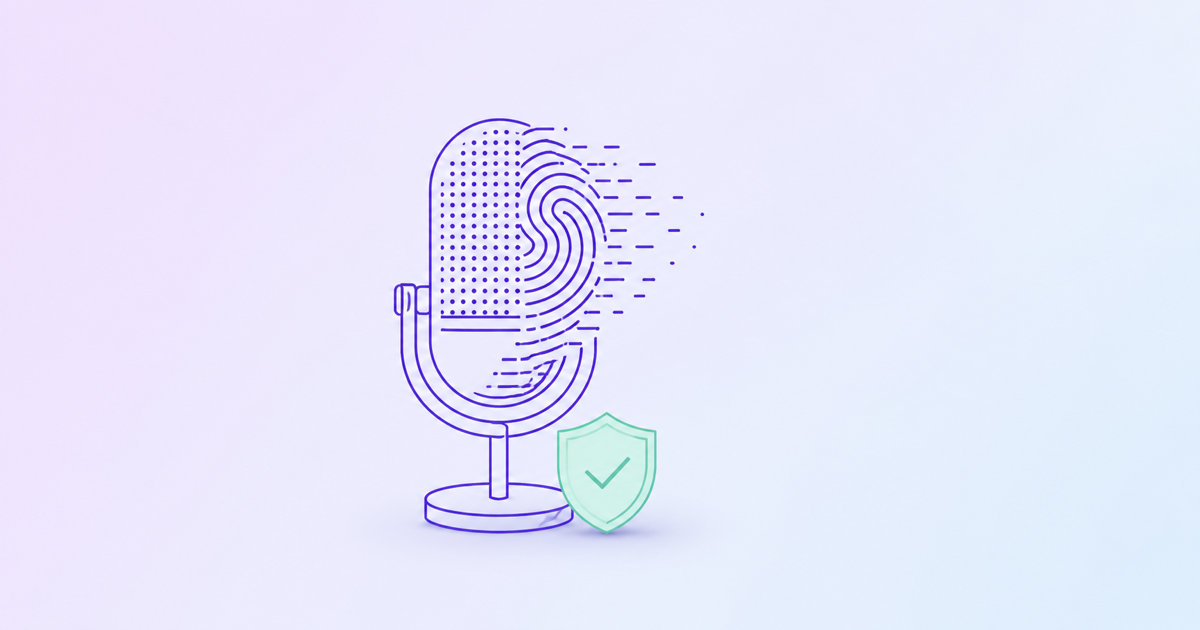
Kevin Gabeci
Voice cloning used to be a science project. You needed hours of clean training audio, an ML engineer, and a reason to care. Today it’s a drop zone in a web app. Thirty seconds of reference audio, a few minutes of compute, and you have a synthetic voice that can read any script you type.
That collapse in cost is exciting for creators and catastrophic for everyone else. The same pipeline that lets an indie musician clone their own vocal performance for a demo also lets a scammer call your grandmother and ask for money in a voice that sounds exactly like yours. There is no technology fix for this. The only thing standing between “powerful creative tool” and “industrial fraud engine” is norms, law, and the choices individual creators make every day.
This piece is about those choices. It is not legal advice, and the law is moving fast, so where something is a hard legal rule I will say so and point you at the primary source. Where it is a norm or a best practice, I will say that too.
The core consent principle
One sentence matters more than any other. Say it out loud before you clone anything:
You may clone a voice you own, or a voice whose owner has given you explicit, documented permission. You may not clone anyone else.
That is not a law (it is actually stronger than any law currently on the books). It is the norm that every serious creator, platform, and publisher is converging on, and it is the rule that keeps you out of the worst kinds of trouble. If you work within it, the rest of this piece is mostly details. If you work outside it, the rest of this piece is a catalog of ways you can be harmed.
“Explicit, documented permission” means:
- A signed agreement or a written message, not an assumption.
- Specific to the use case. “You can use my voice” is not the same as “you can use my voice to make a political ad.”
- Revocable. The person should be able to pull consent later for future work, even if they cannot pull it for work already distributed.
A verbal “yeah sure” does not meet this bar. Get it in writing, keep a copy, and you stay clean.
What the law actually says (as of 2026)
Voice cloning law is a patchwork. Here is a region-by-region sketch, with the caveat that this is changing quarter by quarter.
United States. No federal voice-cloning statute yet. But there is:
- The Federal Trade Commission’s Impersonation Rule, which went final in early 2024 and bans impersonation of individuals in commerce. Cloning a real person’s voice to sell something without their consent is FTC-actionable.
- State right of publicity laws. Tennessee’s ELVIS Act (2024) is the clearest: it makes unauthorized voice cloning a civil and criminal offense, with statutory damages. California, New York, and Illinois have weaker but still real protections under their existing right of publicity regimes.
- The NO FAKES Act has been reintroduced in Congress multiple times. Watch this space.
European Union. The AI Act (effective in stages through 2026) requires disclosure when users interact with synthetic media, including voice. GDPR also applies: a human voice is personal data, and cloning one without a legal basis (consent being the cleanest) is a GDPR violation.
United Kingdom. Similar direction to the EU but less settled. The Online Safety Act covers some deepfake harms but not commercial cloning specifically.
Everywhere else. Big variance. Some countries have strong defamation law that applies. Some have nothing yet. Assume the trend is toward stricter, not more permissive, and plan for the stricter rule.
If you’re publishing to a global audience, the practical move is to comply with the strictest regime you reach. For most creators on most platforms, that means EU-level rules: disclose, consent, document.
Platform policies beat the law, in practice
Even where the law is ambiguous, platforms enforce their own rules. Here’s where most creators actually get hurt.
YouTube cracked down on unauthorized voice cloning of identifiable people in late 2023 and has been tightening ever since. Videos flagged as “synthetic media impersonating a real person” can be taken down on first report, and channels with a pattern of violations lose monetization.
TikTok requires synthetic-media disclosure for any content depicting a real person. Hidden cloning is a terms violation. Enforcement is lag-heavy but the policy is clear.
Spotify removed hundreds of thousands of tracks in 2024 that used unauthorized vocal cloning, and has been adding detection to its ingestion pipeline. Getting your catalog removed is a real risk if you cloned without consent.
Apple Music similar stance, less public enforcement.
The operative lesson: even if your cloning were legal in your jurisdiction, the platforms you actually distribute to will treat it as a policy violation. The law sets the floor. The platforms set the ceiling. You live under the ceiling.
The grey areas that trip people up
Some cases look clean but actually aren’t.
Cloning a dead artist. In most US states, right of publicity survives death for a set term (75 years in Tennessee, 70 in California, zero in New York for pre-1985 deaths). You cannot assume a deceased artist’s voice is fair game, especially if their estate is actively licensing it.
Cloning a fan’s cover of your song. Even if you own the composition, the cover singer owns their performance. You can’t rip their vocal and clone it.
Cloning a character voice actor did. The voice actor owns the delivery. The studio may own the character. Both probably need to consent, and in practice this is a lawsuit waiting to happen.
Cloning a public figure’s voice for satire. Satire gets some First Amendment protection in the US but it varies by state and platform. On most platforms, satire that sounds like the real person without a clear disclosure is treated the same as disinformation.
Training a voice model on podcasts you legally streamed. The podcast host did not consent to having their voice turned into training data. This is an open question in the law but not an open question in reputation: it’s the fastest way to become a villain in your community.
The rule of thumb for all of these: if there’s a human whose voice you’d be cloning and who might object, assume they would object, and act accordingly. The upside of cloning someone against their will is a track you probably shouldn’t release anyway. The downside is everything from takedowns to civil suits to a permanent label.
The right way to use synthetic voices
After all of that, you might be wondering what is actually OK. Plenty. Here are the patterns that work.
Clone your own voice for creative freedom. You’re a songwriter who can’t sing on key. You clone your own speaking voice, train it on pitched takes, and now you can write songs that get performed in something that’s recognizably yours. Fully legal, fully ethical, and genuinely useful.
Generate a synthetic voice with no real-world referent. Pick a timbre, a gender, an energy, and let the model build a voice that isn’t a copy of anyone. This is what most music platforms (Melodex included) default to. The voice is its own thing. No one has standing to object because there’s no one to object.
License a voice with a clear contract. If you want a specific voice and you’re willing to pay for it, there are marketplaces where vocalists license their cloned voice for commercial use. The contract spells out what you can and can’t do with it. This is the studio-musician model applied to AI.
Use voice cloning for accessibility. Building a version of your own voice that a tool can read text in, for when your voice is tired or gone. Generating a synthetic narrator for a video game for players with reading difficulties. These uses have the fewest ethical tripwires because the “voice” is doing work you already owned.
Disclosure: say so, in a visible way
Even with consent, disclose that a voice is synthetic. Not because the law always requires it, but because audiences respect creators who are upfront and punish creators who aren’t.
The minimum disclosure: a note in the video description, the track metadata, or the end-of-song credits that says “vocals generated with AI” or “voice cloning used with consent from [name].” If the voice is doing something unusual (imitating a specific style, speaking in a language the person doesn’t speak), spell that out too.
Platforms are adding disclosure flags in their upload flows. Use them. A video that is properly flagged stays up. A video that hides its synthetic origin gets taken down when someone reports it, and “I meant to flag it” is not a defense anyone treats seriously.
What Melodex does about all of this
Full disclosure on our own practices. Melodex lets you provide a voice sample for a generated song, but it requires you to confirm that the sample is your voice or that you have explicit permission to use it. The Terms prohibit unauthorized impersonation. Melodex cannot independently prove who is speaking in every uploaded sample, so that confirmation is a user responsibility, not a technical guarantee from us.
Melodex does not offer a “sound like [named artist]” control or a marketplace of celebrity voices. Use your own voice, a properly licensed performer, or one of the supplied synthetic voices, and disclose synthetic vocals when the context calls for it.
The shortest version
If you remember one thing, remember this: voice cloning is a power that only stays good if the people wielding it treat consent as the default and disclosure as the baseline. Every workaround you find to those two rules is a workaround a lawyer, a platform, or a listener will eventually find too.
Clone yourself. Generate synthetic voices that aren’t anyone. Get written consent when you want to work with a real voice. Say so when you used AI. Do that, and you get to use this tool for the rest of your creative life without ever looking over your shoulder. Skip those steps, and the question is not whether the bill comes due. The question is when.
Frequently asked questions
- Is AI voice cloning legal in 2026?
- It is legal when you clone your own voice or a voice whose owner has given explicit, documented permission. Cloning anyone else without consent is actionable under FTC impersonation rules and state right of publicity laws, with Tennessee's ELVIS Act being the strongest specific statute.
- Can I clone a voice for personal use without consent?
- Norm and law treat personal use slightly more leniently, but reputation risk and platform bans still apply. Most platforms (TikTok, YouTube, Instagram) ban non-consensual cloned voices regardless of whether you publish or not. The safer rule is consent every time.
- What counts as explicit, documented consent for voice cloning?
- A signed agreement or a written message specifying the use case, with the option for the owner to revoke for future work. A verbal yes does not meet the bar. Keep a copy of the consent record alongside the cloned voice files.
- Which platforms ban AI voice cloning content?
- TikTok, YouTube, Instagram, and Spotify all have policies against non-consensual cloned voices and synthetic likeness in 2026. Even with consent, some platforms require a synthetic media disclosure label. Check each platform's most recent policy before publishing.
- What is the Tennessee ELVIS Act?
- Tennessee's ELVIS Act is the strongest US state statute on AI voice cloning. It makes unauthorized voice cloning a civil and criminal offense with statutory damages. Other states (California, New York, Illinois) have weaker but real protections under right of publicity laws.
- Can I clone a voice for satire or parody?
- Maybe, but the line is narrow. Fair use can cover clear satire, but courts in 2026 have not consistently sided with creators on AI voice satire. Get legal advice for any commercial satirical project, and label the work as synthetic.
- What about cloning a public figure's voice for a song?
- High risk. Even with fair use arguments, the major labels and estates have aggressively pursued takedowns and lawsuits. Several 2024 to 2026 cases ended with takedowns or settlements. Use the cloned voice as a private demo at most, never in a release.
Keep reading
How to Control Song Structure in AI Music
Stop AI music from defaulting to the same generic arrangement. Use section tags, lyric labels, and prompt phrasing to force real intros, choruses, bridges, and dynamics.
How to Produce an AI Album in a Weekend
A batch workflow for building a cohesive AI album in two days. Concept, tracklist, batched generation, comping, mixing, and mastering the whole thing as one set.